Hello !
Hope you having been enjoying the blog posts so far!
Todays post will evaluate the impact of the internet and digital technologies on the marketing mix elements for the Retail Trade Industry.
The marketing mix entails a series of seven key variables; Product, Price, Place, Promotion, People, Process and Physical Evidence (7 P’s)
The Figure below summaries the different sub-elements of the 7 P’s:
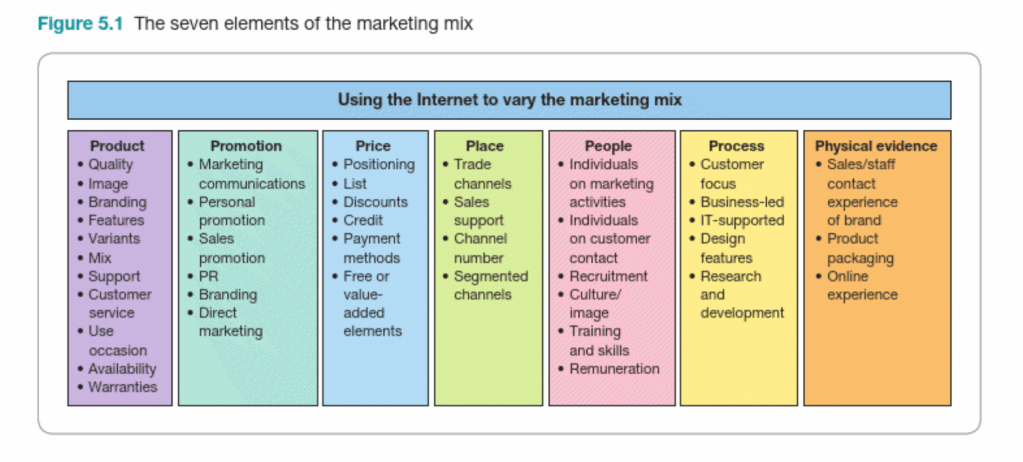
(Chaffey, D & Ellis-Chadwick 2019).
Digital media and technologies provide many new opportunities for marketers. Some of these include:
- Varying the application of the marketing mix
- Developing new routes to delivering competitive advantage
- Creating new market positions
- Allowing businesses to build and service relationships in increasingly innovative ways
- Cutting through the barrier of time and space and offering continuous and instantaneous access to products and services.
The Retail Trade Industry
In terms of breaking down the impact of digital technologies on each element of the retail industry marketing mix:
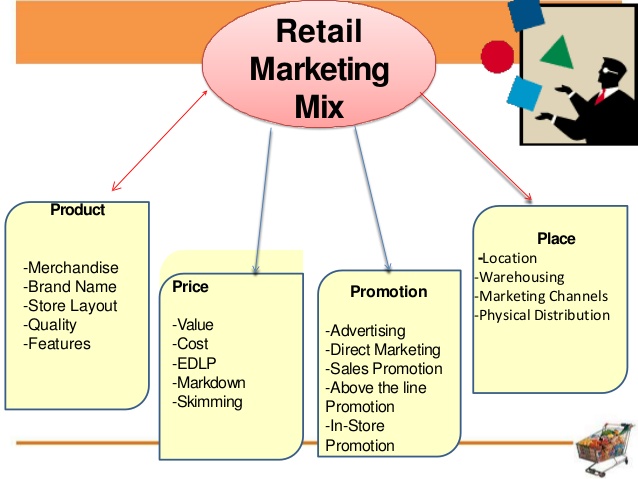
Product—The characteristics of a product. Involves researching customers’ needs and developing appropriate products and communicating their features and benefits (Chaffey, D & Ellis-Chadwick 2019).
Product characteristics play a major role in the successful marketing of a product on the Internet. In the Retail Trade Industry, the product is the merchandise that is being sold. There are two primary types of merchandise. Hard or durable goods such as appliances, electronics, and sporting equipment and soft goods like clothing, household items and cosmetics (Bueno 2013).
The effects of digital technology on the Retail Trade Industry:

- Creates options for offering digital products eg. Subscriptions to fashion websites, newsletters
- Allows business to conduct online research into customer interest eg. Surveys, online customer reviews on products, feedback
- Increases the speed of new product development
- Increases the speed of the distribution of products
- Digital technology has allowed businesses to develop a new generation of products such as newspapers, magazines, online games, photos, graphics, and videos.
- The form of some products is modified with the use of the internet—electronic books, e-tickets, digital photographs, and online bill paying are examples of changes in the form of traditional products.
(Nezamabad 2011).
Price—Involves defining product prices and pricing models (Chaffey, D & Ellis-Chadwick 2019). The price that customers are willing to pay, based on considerations such as the company, brand, reputation and product
Effects of digital technology on the Retail Trade Industry:

- Pricing and competitor information is faster and more transparent, meaning that market forces also tend to act faster and perhaps more efficiently.
- Increased price transparency- customer knowledge about pricing increases due to availability of pricing information.
- Downward pressure on pricing—common for online retail outlets.
- There are alternative pricing structure or policies eg. Discounts, refund policies, warranties (Nezamabad 2011).
Place—involves distributing products to customers in line with demand and minimising the cost of inventory, transport and storage (Chaffey, D & Ellis-Chadwick 2019). Distributing products to where the retailer conducts business with its customers.
Effects of digital technology on the Retail Trade Industry:

- Distribution is expensive. It can account for 50 percent or more of a product’s final price.
- Distribution activities do not disappear when a business moves to an e-commerce strategy
- Place of purchase. The issues associated with logistics, distribution and the point of sale and other transactions are important to note for digital marketers. For example, when selling physical goods there are cost and time issues associated with fulfilment (local, regional and international) together with issues of trust, culture and local support networks. However, in the case of sellers of digital products there is no physical limitation on fulfilment (Nezamabad 2011)
- Mobile point of sale
Promotion—involves communication with customers and other stakeholders to inform them about the product and the organisation (Chaffey, D & Ellis-Chadwick 2019). It is the element of the marketing mix that involves communication with customers and other stakeholders to inform them about the product and the organisation. Promotions include personal selling, advertising, sales promotion, direct marketing, and publicity. Communications including a range of efforts including advertising, public relations, grassroots efforts, social media, and any other form of communication between the company and the consumer (Nezamabad 2011).
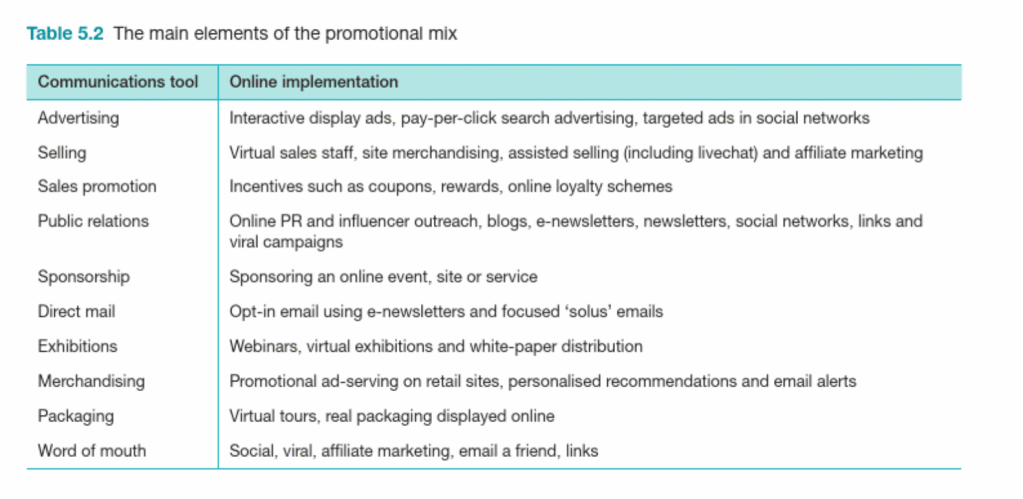
Effects of digital technology on the Retail Trade Industry:

- Digital technology is changing the way individuals and business communicate, the channels through which they communicate, and the number of touchpoints encountered.
- Reminders in traditional media campaigns of why a site is worth visiting – such as online services and unique online offers and competitions
- Direct email reminders of site proposition – new offers
- Frequently updated content – including promotional offers or information that helps your customer do their job or reminds them to visit.
- Allows information to be accessed without geographical location constraints and offers the possibility of delivering messages enhanced by colour, sound and animation effects, as well as two-way interactions.
- Digital promotions
- Location-based applications and promotions
- Personal shopping assistants
People— The People, Process and Physical evidence elements of the mix are closely related and often grouped as ‘the service elements. People involves the delivery of service and how an organisation’s staff interact with customers and other stakeholders during sales and pre and post-sales communications with them (Chaffey, D & Ellis-Chadwick 2019).
People are significant since the level of perceived service will impact on a customer’s loyalty and the probability of them recommending the service. The role of an employee is more important at a Department store as the customers often need assistance while shopping and hence more emphasis is paid on personnel management. If retail outlets are not handled with the right people, the product will not be sold (Nezamabad 2011).
Effects of digital technology on the Retail Trade Industry:

- Substitution— deploying technology instead of people for example: frequently asked questions section on a website
- In-site search engines
- Avatars offering answers to questions, as in the Ikea ‘Ask Anna’ feature
- Automated email response or a series of ‘Welcome’ emails educating customers about how to use a service
- Using videos to demonstrate products online.
Process—involves the methods and procedures companies use to achieve all marketing functions such as new product development, promotion, sales and customer service (Chaffey, D & Ellis-Chadwick 2019).
The restructuring of the organisation and channel structures to accommodate online marketing, are part of Process.
Effects of digital technology on the Retail Trade Industry:

- To minimise average response time per email and the range of response time from slowest to fastest – this should form the basis of an advertised service quality level
- To minimise resolution time – for example, number of contacts and elapsed time to resolution
- To maximise customer satisfaction ratings with response
- To minimise average staff time and cost per email response.
Physical Evidence— involves the tangible expression of a product and how it is purchased and used. In an online context, ‘physical evidence’ refers to the customer’s experience of the company through the website (Chaffey, D & Ellis-Chadwick 2019).
Effects of digital technology on the Retail Trade Industry:
- Ease of use or navigation
- Availability
- Performance
- Electronic price tags
- Mobile payments and digital wallets
Social media marketing tactics suitable for an online store:
Technology is used in marketing widely across business and enables tasks to be automated in both the marketing and sales process to deliver more relevant communications. Such as being delivered as personalised emails and website messages.
Social media marketing has many applications throughout the customer lifecycle but is generally most effect when used to develop relationships and encourage advocacy to create brand awareness and favourability. Social media marketing is based on how we can use consumer-to-consumer interactions to increase awareness of the brand through social media amplification while minimising negative mentions.
Tactics and important considerations:
- Marketing- monitoring, analysis and response of customer conversation through social listening tools- are you paying attention to competitors, what customers are saying (valuable information)
- Sales- understanding where prospects are, determining the best way to get involved in the conversation to influence sales and generate leads e.g. Social selling
- Taking into account all social networks available
- Social publishing and news
- Chatbots- for answering FAQs
- Influencer marketing (someone relevant to your brand)
- Social media contests
- Consistency/ engagement
Thanks for reading 🙂 Hope you enjoyed !
References:
Azeem, S & Sharma, R 2015, ‘Elements of the retail marketing mix: a study of different retail formats’, The Business & Management Review, vo. 5, no. 4, pg. 61-54, viewed 11 September 2019, https://pdfs.semanticscholar.org/77f1/32a3cb10c6a13125e24b270e21661f70ba94.pdf
Bueno, B 2013, What is Retail Marketing, Cult Branding Company, n.p, viewed 11 September 2019, https://cultbranding.com/ceo/what-is-retail-marketing/
Chaffey, D & Ellis-Chadwick, F 2019, Digital Marketing; strategy, implementation and practice, 7th edn, Pearson, United Kingdom
Nezamabad, M 2011, ‘The Impact and Benefits of Internet on Marketing Mix’, Australian Journal of Basic and Applied Sciences, vol. 5, no. 9, pg. 1784-1789, viewed 11 September 2019, http://ajbasweb.com/old/ajbas/2011/September-2011/1784-1789.pdf
Prepletany, D 2013, The Impact of Technology on Retail Industry, Academia, n.p, viewed 11 September 2019, https://www.academia.edu/8251557/Impact_of_Technology_on_Retail_Industry
The Retail Mix 2019, Lumen way maker , n.p, viewed 11 September 2019, https://courses.lumenlearning.com/wm-retailmanagement/chapter/retail-mix/
 Rebecca's Blog
I agree with you about this retail promotion! If you dont mind, please visit my blog and drop your comment on there! Thankies!
LikeLike
Wow … a very informative price with some great diagrams & pictures
LikeLike
Very informative blog thanks for breaking down the marketing mix made it easy to read and understand
LikeLike