My name is Rebecca and I’m in my last semester at the University of Canberra, very exciting. So I’m studying a Bachelor of Events and Tourism Management and i have a particular interest in Marketing and Management.
In terms of my hobbies I love skiing and have been doing it since i was able to walk- cheers mum and dad.
This blog will include all things business and I’ll be sharing with you my thoughts as well as information on various topics.
Hello ! Hope you having been enjoying the blog posts so far! Todays post will evaluate the impact of the internet and digital technologies on the marketing mix elements for the Retail Trade Industry.
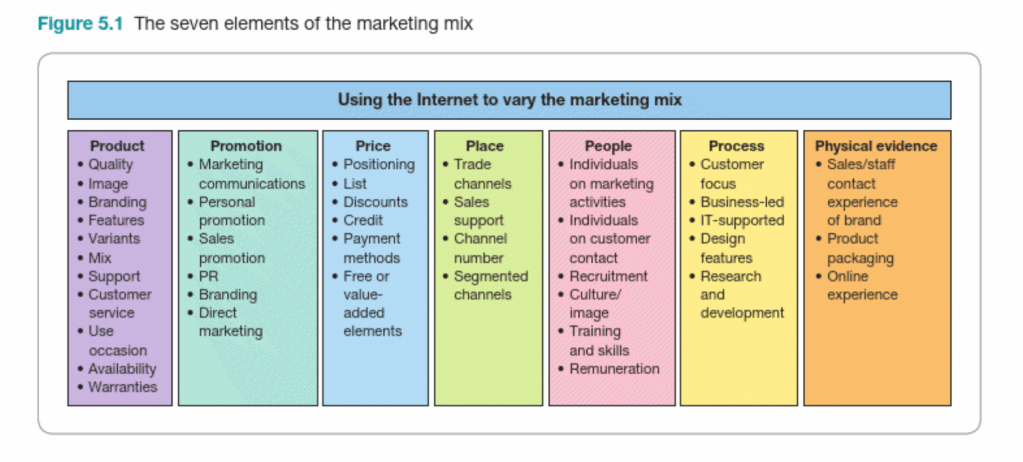
The marketing mix entails a series of seven key variables;
Product, Price, Place, Promotion, People, Process and Physical Evidence (7 P’s)
The Figure below summaries the different sub-elements of the 7 P’s:
(Chaffey, D & Ellis-Chadwick 2019).
Digital media and technologies provide many new opportunities for
marketers. Some of these include:
Varying the application of the marketing mix
Developing new routes to delivering competitive advantage
Creating new market positions
Allowing businesses to build and service relationships in increasingly innovative ways
Cutting through the barrier of time and space and offering continuous and instantaneous access to products and services.
The Retail Trade Industry
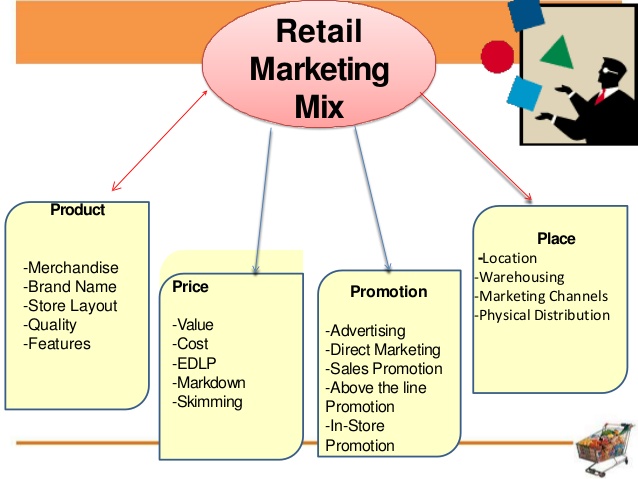
In terms of breaking down the impact of digital technologies on each element of the retail industry marketing mix:
Product—The characteristics of a product. Involves researching customers’ needs and developing appropriate products and communicating their features and benefits (Chaffey, D & Ellis-Chadwick 2019). Product characteristics play a major role in the successful marketing of a product on the Internet. In the Retail Trade Industry, the product is the merchandise that is being sold. There are two primary types of merchandise. Hard or durable goods such as appliances, electronics, and sporting equipment and soft goods like clothing, household items and cosmetics (Bueno 2013).
The effects of digital technology on the
Retail Trade Industry:
Creates options for offering digital products eg. Subscriptions to fashion websites, newsletters
Allows business to conduct online research into customer interest eg. Surveys, online customer reviews on products, feedback
Increases the speed of new product development
Increases the speed of the distribution of products
Digital technology has allowed businesses to develop a new generation of products such as newspapers, magazines, online games, photos, graphics, and videos.
The form of some products is modified with the use of the internet—electronic books, e-tickets, digital photographs, and online bill paying are examples of changes in the form of traditional products. (Nezamabad 2011).
Price—Involves
defining product prices and pricing models (Chaffey, D &
Ellis-Chadwick 2019). The
price that customers are willing to pay, based on considerations such as the
company, brand, reputation and product
Effects of digital technology on the
Retail Trade Industry:
Pricing and competitor information is faster and more transparent, meaning that market forces also tend to act faster and perhaps more efficiently.
Increased price transparency- customer knowledge about pricing increases due to availability of pricing information.
Downward pressure on pricing—common for online retail outlets.
There are alternative pricing structure or policies eg. Discounts, refund policies, warranties (Nezamabad 2011).
Place—involves distributing products to
customers in line with demand and minimising the cost of inventory, transport
and storage (Chaffey, D & Ellis-Chadwick 2019). Distributing products to where the retailer conducts business
with its customers.
Effects of digital technology on the
Retail Trade Industry:
Distribution is expensive. It can account for 50 percent or more of a product’s final price.
Distribution activities do not disappear when a business moves to an e-commerce strategy
Place of purchase. The issues associated with logistics, distribution and the point of sale and other transactions are important to note for digital marketers. For example, when selling physical goods there are cost and time issues associated with fulfilment (local, regional and international) together with issues of trust, culture and local support networks. However, in the case of sellers of digital products there is no physical limitation on fulfilment (Nezamabad 2011)
Mobile point of sale
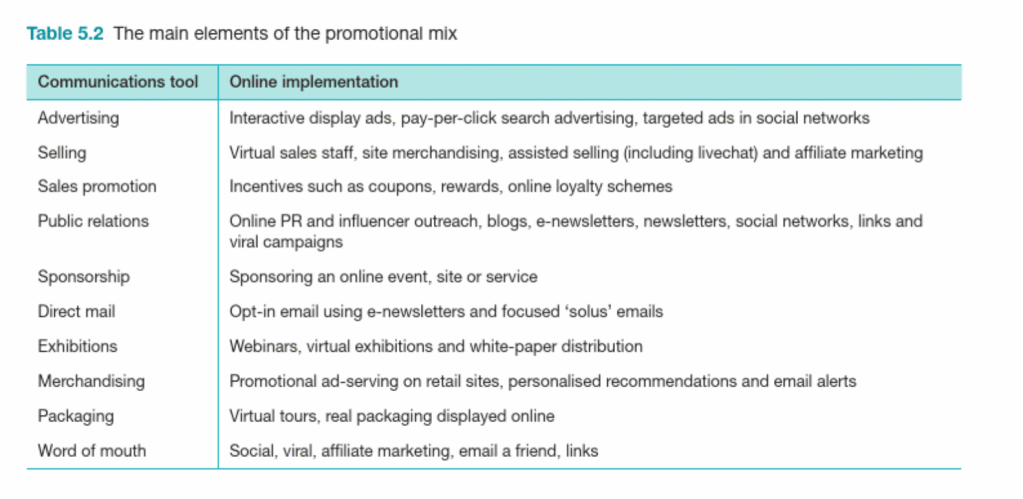
Promotion—involves communication with customers and other stakeholders to inform them about the product and the organisation (Chaffey, D & Ellis-Chadwick 2019). It is the element of the marketing mix that involves communication with customers and other stakeholders to inform them about the product and the organisation. Promotions include personal selling, advertising, sales promotion, direct marketing, and publicity. Communications including a range of efforts including advertising, public relations, grassroots efforts, social media, and any other form of communication between the company and the consumer (Nezamabad 2011).
Effects of digital technology on the
Retail Trade Industry:
Digital technology is changing the way individuals and business communicate, the channels through which they communicate, and the number of touchpoints encountered.
Reminders in traditional media campaigns of why a site is worth visiting – such as online services and unique online offers and competitions
Direct email reminders of site proposition – new offers
Frequently updated content – including promotional offers or information that helps your customer do their job or reminds them to visit.
Allows information to be accessed without geographical location constraints and offers the possibility of delivering messages enhanced by colour, sound and animation effects, as well as two-way interactions.
Digital promotions
Location-based applications and promotions
Personal shopping assistants
People— The People, Process and Physical evidence elements of the mix are closely related and often grouped as ‘the service elements. People involves the delivery of service and how an organisation’s staff interact with customers and other stakeholders during sales and pre and post-sales communications with them (Chaffey, D & Ellis-Chadwick 2019).
People are significant since the
level of perceived service will impact on a customer’s loyalty and the
probability of them recommending the service. The
role of an employee is more important at a Department store as the customers
often need assistance while shopping and hence more emphasis is paid on
personnel management. If retail outlets are not handled with the right people, the product will
not be sold (Nezamabad 2011).
Effects of digital technology on the
Retail Trade Industry:
Substitution— deploying technology instead of people for example: frequently asked questions section on a website
In-site search engines
Avatars offering answers to questions, as in the Ikea ‘Ask Anna’ feature
Automated email response or a series of ‘Welcome’ emails educating customers about how to use a service
Using videos to demonstrate products online.
Process—involves the methods and procedures companies use to achieve all marketing functions such as new product development, promotion, sales and customer service (Chaffey, D & Ellis-Chadwick 2019). The restructuring of the organisation and channel structures to accommodate online marketing, are part of Process.
Effects of digital technology on the
Retail Trade Industry:
To minimise average response time per email and the range of response time from slowest to fastest – this should form the basis of an advertised service quality level
To minimise resolution time – for example, number of contacts and elapsed time to resolution
To maximise customer satisfaction ratings with response
To minimise average staff time and cost per email response.
Physical Evidence—
involves the tangible expression of a product and how it is
purchased and used.
In an online context, ‘physical evidence’ refers
to the customer’s experience of the company through the website (Chaffey, D & Ellis-Chadwick
2019).
Effects of digital technology on the
Retail Trade Industry:
Ease of use or navigation
Availability
Performance
Electronic price tags
Mobile payments and digital wallets
Social media marketing tactics suitable for an online store:
Technology is used in marketing widely across business and enables tasks to be automated in both the marketing and sales process to deliver more relevant communications. Such as being delivered as personalised emails and website messages.
Social media marketing has many applications throughout the customer lifecycle but is generally most effect when used to develop relationships and encourage advocacy to create brand awareness and favourability. Social media marketing is based on how we can use consumer-to-consumer interactions to increase awareness of the brand through social media amplification while minimising negative mentions.
Tactics and
important considerations:
Marketing- monitoring, analysis and response of customer conversation
through social listening tools- are you paying attention to competitors, what
customers are saying (valuable information)
Sales- understanding where prospects are, determining the best way
to get involved in the conversation to influence sales and generate leads e.g.
Social selling
Taking into account all social networks available
Social publishing and news
Chatbots- for answering FAQs
Influencer marketing (someone relevant to
your brand)
Welcome back 🙂 Hope you all have been enjoying my blog posts so far. Today’s blog post will cover all the in’s and out’s you want to know about Apple
Is Apple a company of Superior Innovation?
Apple Inc is based in Cupertino, California and was established in 1976 by Steve Jobs Steve Wozniak, and Ronald Wayne. The company was originally called ‘Apple Computer’ for the first 30 years but later dropped the word ‘computer’ in 2007 to reflect the company’s ongoing expansion. On September 30, 2013, Apple surpassed Coca-Cola to become the world’s most valuable brand in the Omnicom Group’s “Best Global Brands” report (Nielson, S 2014).
The company designs, manufactures, and markets mobile communication and media devices, personal computers, and portable digital music players. Apple also sells a variety of related software, services, peripherals, networking solutions, and third-party digital content and applications (Nielson, S 2014).
Steve Jobs quoted, “Apple was a company that was based on innovation. When I left Apple ten years ago, we were ten years ahead of everybody else”. Apple’s business strategy leverages its unique ability to design and develop its own operating systems, hardware, application software, and services to provide new products and solutions to customers with superior ease-of-use, seamless integration, and innovative design (Nielson, S 2014).
Apple is known for its superior innovation and has established a unique reputation in the electronics industry with a loyal customer base. Apple believes that a high-quality buying experience greatly enhances its ability to attract and retain customers. Furthermore, Apple’s strategy also involves enhancing and expanding its own retail and online stores—allowing them to effectively reach more customers (Nielson, S 2014).
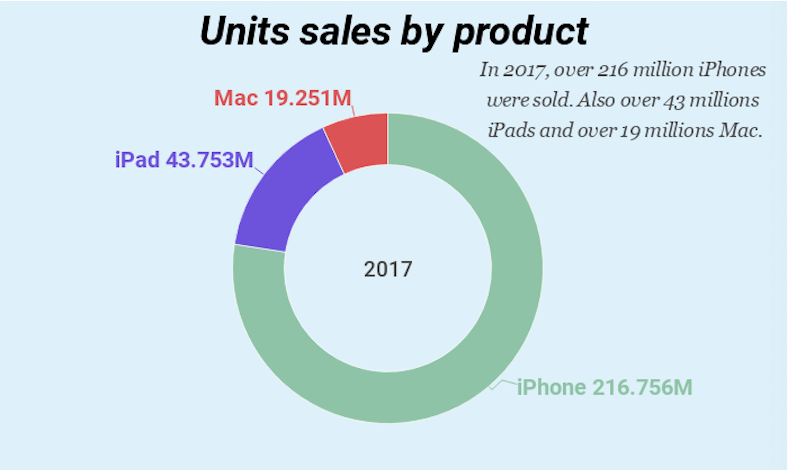
The company’s best-known products include Mac computers, the iPod, the iPhone, and the iPad. In 2014, the company sold 26 million iPads during the quarter, compared to 22.9 million in the previous quarter. According to Apple’s recent earnings call, the iPad had a 78% share of the U.S. commercial tablet market.
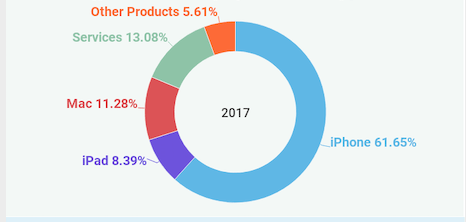
The graph below highlights how the iPhone dominated majority of Apple’s sales.
Apple sells and delivers digital content and applications through the iTunes Store, App Store, iBooks Store, and Mac App Store. Apple also sells its products worldwide through third-party cellular network carriers, wholesalers, retailers, and value-added resellers (Nielson, S 2014).
Apple’s strategy:
Apple’s CEO Tim Cook quoted “We never
had an objective to sell a low-cost phone. Our primary objective is to sell a
great phone and provide a great experience, and we figured out a way to do it
at a lower cost.”
Steve Jobs strategy for Apple had
four pillars:
Offer a small number of products.
Focus on the high end
Give priority to profits over market share
Create a halo effect that makes people starve for new Apple products
Apple attempts to increase market demand through differentiation. Additionally, the company’s products have always been designed to be ahead of the curve. Despite high competition, Apple has succeeded in creating demand for its products, giving the company power over prices through product differentiation, innovative advertising, ensured brand loyalty, and hype around the launch of new products. By focusing on customers willing to pay more and maintaining a premium price at the cost of unit volume, Apple also set up an artificial entry barrier to competitors (Nielson, S 2014).
In summary, Apple has become the first American company to reach US$1 trillion in market capitalisation. Apple is the most profitable smart phone manufacturer globally through its sustained competitive advantage, innovation, superior design, marketing and its domination of the advanced consumer electronics supply chain.
Apple’s Business and Revenue Models
The quintessential element of Apple’s business model is its ability to ‘own the consumer’. In short, Apple’s business model is designed to drive consumers into its ecosystem and then hold them there, which has been hugely successful to date and has allowed Apple to wield enormous power in the end-to-end supply chain (Montgomerie & Roscoe 2013).
This business model gives Apple the unique ability to maintain a low cost sourcing strategy while maintaining high price points and subsequently locking the consumer in through high switching penalties.
Apple’s business model affects not only its direct shareholders but also moves markets, which impacts overall macroeconomic performance. In April 2012, Apple’s shares reached a high of $636.00 and market capitalisation surged to $570 billion, more than the value of Google, Microsoft, HP, Dell and Yahoo combined (Montgomerie & Roscoe 2013).
A key facet of Apple’s business model is ensuring that Apple content can only be played on Apple devices, as this helps maintain digital download market share and in turn drives sales volume for profitable hardware devices. The power Apple derives from owning the consumer is evident downstream in the supply chain, for example with retailers, as Apple designs its own in-store displays and places their own sales staff in big retail stores to promote Apple products (Montgomerie & Roscoe 2013).
In 2017, over 60% of Apples revenue came from the iPhone. The remaining was the iPad and Mac. Services like digital content, apple pay and apple care make up over 13% of its revenue. Additionally other products such as Apple Tv, Apple Watch, Beats products, iPod touches and other apple branded and third-party accessories make up 5.61% as shown in the diagram below.
Thanks for reading today’s post, hope you enjoyed 🙂
Welcome back 🙂 Hope you all have been enjoying my blog posts so far.
Today’s post will discuss the influence of social media through analysing
the Social Media Marketing Framework with various real-life examples.
Social Media is reshaping the marketing environment significantly. People’s fascination and interest in the private life of other’s has given rise to the increasing capacity of social media to influence every aspect of human activity. However, the management of this type of digital communication and media is often in a state of anarchy (Chaffey, D & Ellis-Chadwick 2019).
The Social Media Marketing Framework offers a holistic way to consider the strategic application of Social Media, regularly used by high-profile social media personalities.
Felix et al. (2016) proposed four dimensions to social media marketing:
Scope—focuses on the extent to
which social media platforms are used as a one-way communications tool. To
entertain and inform end-users or as a collaborative environment facilitating
interactions between end-users and companies.
Culture—distinguishes between
the use of social media as a traditional mass-marketing channel or a more
modernist approach of being flexible.
Structure—looks at organisation
and how it is deployed.
Governance—relates to company rules
and to what extent employees are told what they can and can’t say on social
media.
This framework seeks to highlight the complexities underlying the use of social media and the importance of taking a multidimensional approach towards its application and management (Chaffey, D & Ellis-Chadwick 2019).
So now let’s use the above information to analyse the company Kylie Cosmetics.
Kylie Cosmetics is an American Cosmetics Company founded by Kylie Jenner in 2015.
Scope Kylie seeks to constantly engage her audience through various social media platforms. She uses both one-way communications tools and interactive approaches to entertain, inform and promote Kylie Cosmetics. On her Kylie Cosmetics website, customers are encouraged to use the #KylieCosmetics to share photos with the products.
Culture Kylie has utilised the reach of digital social media to build a $400 Million cosmetics business in under two years. Kylie Cosmetics uses various social media platforms such as Facebook, Instagram, YouTube and Twitter to share commercial information in both traditional mass-marketing channels and modernist, flexible and open approaches. The company incorporates various digital marketing formats including text, photos, videos, audio, blogs and messages. Kylie Cosmetics Instagram engagement has dramatically increased in comparison to snapchat. Causing her to cut back on her previously frequent snapchat activity- refocusing her efforts on to Instagram. It is important to observe how her core fan base is interacting with her content (Econsultancy 2019).
Structure Prior to creating Kylie Cosmetics, Kylie had already established her own brand with the help and financial boost from the Kardashians. Kylie uses her own face to exhibit her makeup range- most likely saving her a lot of money as no third-party endorsements are needed. Despite Kylie Cosmetics having its own social media accounts, Kylie also promotes the brand on her personal accounts as well (Econsultancy 2019). Kylie Cosmetics has 12 employees- all employees have different roles with significant importance on the promotion and marketing side of the business. The structure is one of centralised control and clearly defined protocols with clear roles for example, social media and marketing manager and content creator.
Governance Kylie owns 100% stake of Kylie Cosmetics. Employees are under contracts to keep new products, concepts and ideas private. There are release dates for products and dates decided for when new product releases can be talked about etc.
Social Media & Financial Industries
To analyse the Social Media Marketing Framework a bit further, I have interpreted what is happening within the financial services industry in relation to its use of social media.
The financial services industry is generally averse to risk,
meaning social media represented a major threat. As a result, many banks,
building societies and financial institutions avoided being represented on
social media platforms (Chaffey, D & Ellis-Chadwick
2019). This caused an issue with customers who increasingly demanded real-time
responses from the companies and service providers. This shows how the scope and
culture of a company or financial institution is important. Nowadays with the access
and saturation of social media, communication between consumers and businesses is
often instant and, in some cases, can be available 24/7. Therefore, the
financial services industry had to start investing in financial technology.
This resulted in not only faster and improved services but also widespread the
use of social media (Chaffey, D & Ellis-Chadwick
2019). In terms of the structure, Facebook, Twitter and other platforms are
used in a controlled way and as a channel that facilitates customer interaction,
improved targeting and niche market expansion. It helps to create a delivery
channel for new products and exploring new business models.
Although there are numerous positive impacts social media has on the financial services industry, it is also possibly the biggest threat of all. By embracing social media, financial services have granted ‘customer mindshare’ to Google, Apple, Facebook, Amazon and Microsoft while paving the way for non-banks to replace the traditional long-standing firms.
Thanks for reading today’s post. Hope you enjoyed 😊
References: Chaffey, D & Ellis-Chadwick, F 2019, Digital Marketing; strategy, implementation and practice, 7th edn, Pearson, United Kingdom
Today’s blog post is combined with a Youtube video ! My aim was to make a light hearted video with an enticing thumbnail that would entertain and draw people in to watch.
Today’s blog post will cover the online experience of
a customer.
Understanding the individual nature of customers is fundamental to marketing practice and planning. Research has shown that there are many factors that influence online behaviour and a consumer’s online experience such as convenience, site design and security which can all affect their overall satisfaction as well (Chaffey, D & Ellis-Chadwick 2019).
An important point to note is that by studying the variables associated with a consumer’s experience, digital marketers are able to understand how to increase loyalty and trust through websites and online services. According to Rose et. Al (2011), ‘customer interactions with an organisation’s website creates opportunities for positive experiences that can lead to long-term relationship building’.
The concept of online consumer experience has been widely studied in
contexts ranging from service delivery to retailing and tourism (Chaffey, D & Ellis-Chadwick
2019).
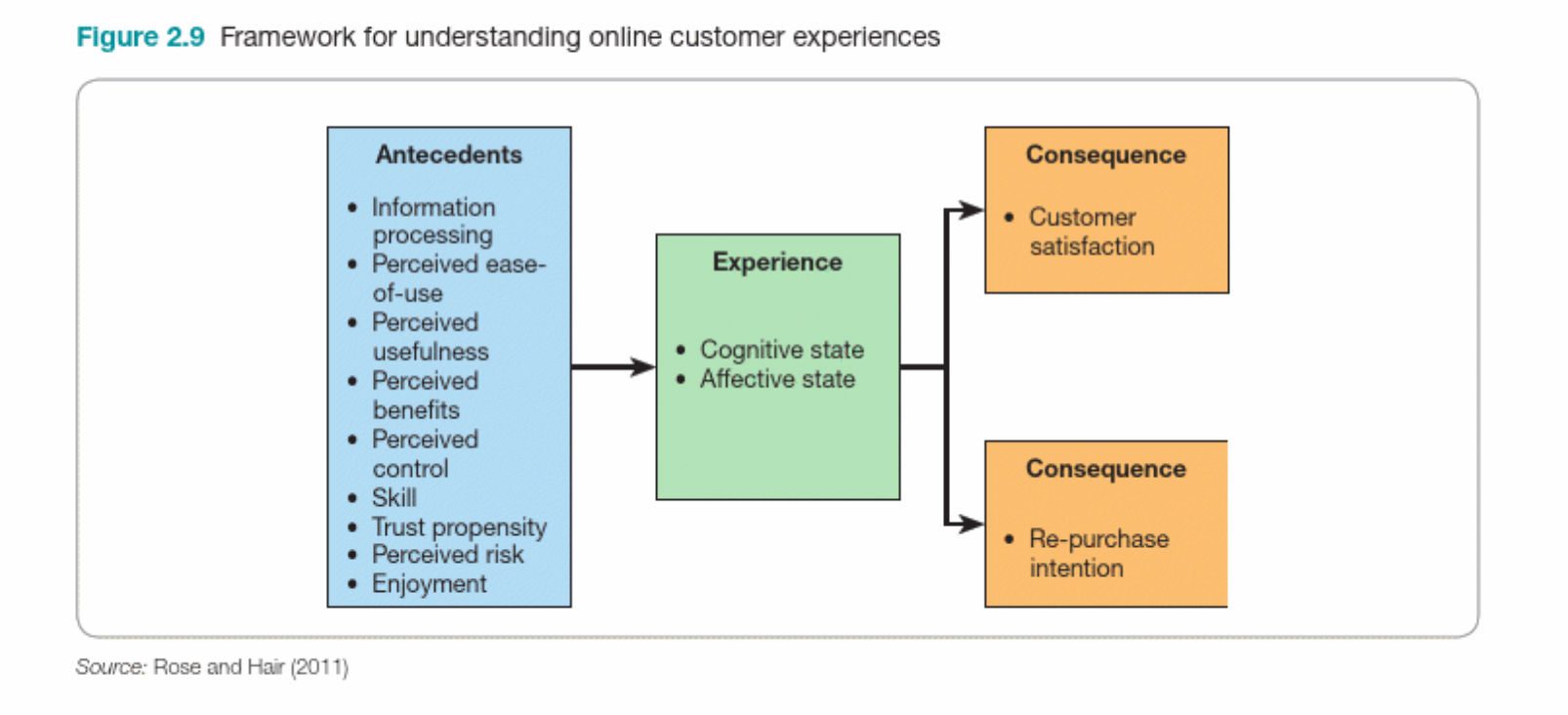
Figure 2.9 below shows a framework for understanding the concepts that motivate and influence the online consumer.
A customer’s past experiences will provide the basis for future evaluations. For example, the antecedents/ background to the online experience can positively or negatively influence the consumer to engage with the digital offer (Chaffey, D & Ellis-Chadwick 2019).
Now let’s break down what each section in the above framework
means.
So, starting off with Antecedents:
Information
processing – this shapes how a customer deals with data and information and
will shape their future online behaviour. It involves the mental processes and
senses individuals use.
Perceived
ease-of-use – the easer a website or mobile site is to use, the more likely a
customer will have a positive online experience.
Perceived
usefulness – the extent to which the digital offer aligns with the customers
daily life, such as online shopping, booking tickets, banking.
Perceived
benefits – if a customer feels as though they will be rewarded in some positive
way by engaging with the digital offer.
Perceived
control – if the customer is a skilled digital technology user, they will feel
they are able to function successfully (confidence).
Skill
– the customers’ ability to use the technology to achieve their desired goals.
Trust
and risk – play an important role in how a customer behaves online. Inexperienced
online users can often feel vulnerable and fear financial risk, social risk and
personal risk. Marketeers should seek to find ways to build trust through
developing online relationships.
Enjoyment
– an outcome of a positive online experience.
(Chaffey, D & Ellis-Chadwick 2019).
These eight antecedents can influence how the customer thinks (cognitive state) and feels (affective state) about their online experience (Chaffey, D & Ellis-Chadwick 2019). If a customer has a positive experience this will increase the likelihood of the customer being satisfied. Leading to positive re-purchase intentions (Chaffey, D & Ellis-Chadwick 2019). Furthermore, digital marketeers need to consider not only the functional aspects of an online offer but also the emotional state and past experiences of the customer and how this can affect levels of engagement, trust and loyalty (Chaffey, D & Ellis-Chadwick 2019).
Putting all of the above information into the real-life example of online clothes shopping. As an online shopper myself there are certain aspects which are important to me. These include ease of use of the website (is the layout clear, easy to navigate), aesthetics of the website (does it look nice and professional), availability of customer service (for help if needed- for example, Princess polly has an online forum where you can chat and get live help within business hours) and availability of payment options (ensuring trust and safety eg. through PayPal). All of these factors affect my attitude and behaviour towards the brand and my willingness to shop.
-> Information processing: Princess Polly’s website is enticing with lots of visual images, key words highlighting various sales and promotions on and a contact us pop up at the bottom. -> Perceived ease-of-use: Princess Polly’s website works easily off both laptop and phone. The layout is clear, and the site is easy to navigate. -> Perceived usefulness: Princess Polly has a variety of clothes ranging from casual to more dressy items, shoes, festival outfits, makeup and accessories. -> Perceived benefits: Princess Polly nearly always has discount codes available or sales on. They have a returns policy where you can get a refund -reducing risk for the customer. -> Perceived control: There is a live chat available for any help if a consumer has any issues using the website. You can make an online account on the website which you can log into and manage at any point. -> Skill: The website is quite straight forward with everything set out logically- making it easy to use for someone with any technological skill level. -> Trust and risk: Their social media presence and popularity as a brand can help increase trust. They have a wide range of payment options including PayPal, after pay, credit cards. So customers can pay with an option they feel comfortable with. -> Enjoyment: The checkout process is quick and the site is easy to use increasing the enjoyment the consumer gets out of the online experience.
Hope you all enjoyed today’s post 🙂
References:
Chaffey, D & Ellis-Chadwick, F 2019, Digital Marketing; strategy, implementation and practice, 7th edn, Pearson, United Kingdom
Todays topic will cover all the basics you need to know about Digital Marketing, including an analysed case study on eBay.
What is Digital Marketing?
Let’s start off with a short video about what Digital Marketing is and how it works!
So, to go into a little bit more depth, Digital Marketing involves the marketing of products and services through the use of digital technologies. It takes into account customer segmentation/ target marketing, positioning and value proposition.
–> A target marketing strategy is the selection of appropriate customer segments and the development of appropriate offers. –>Positioning is the customers perception of the product and brand relative to its competitors. –> Lastly, value proposition is the benefits or value a brand offers to customers in its products and services. These aspects all influence a business’s digital marketing strategy.
The interaction and integration of digital channels and traditional marketing channels is essential for an effective digital marketing strategy. This is called multichannel marketing.
To break it down further there are 5 D’s of managing digital marketing interactions: (Chaffey, D & Ellis-Chadwick 2019).
Digital devices- audiences interact with businesses using a combination of smart phones, laptops, Tv’s, tablets and gaming devices.
Digital platforms- through a browser or apps from major platforms and services such as Facebook, Instagram, Google, YouTube, Twitter, LinkedIn, Amazon, Apple and Microsoft.
Digital Media- there are lots of different communication channels available for reaching audiences including advertising, email, messaging, search engines and social networks
Digital data- the understanding and information businesses collect about their audience and their interactions with the business now needs to be protected by law in most countries (safety).
Digital technologies- this is the technology that a business uses to create interactive experiences from websites and mobile apps to in-store kiosks and email campaigns.
The Chartered Institute of Marketing states that “Marketing is the management process responsible for identifying, anticipating and satisfying customer requirements profitably”. Digital Marketing can be used to support these three aims. For example, the internet can be used to identify customers’ needs and wants. Customers make purchases on the internet- so evaluating this demand is key to governing resource allocation to e-marketing. Lastly, making sure the site is easy to use, performs adequately and online customer service availability (Chaffey, D & Ellis-Chadwick 2019).
Case Study: eBay How has eBay had to evolve its online brand proposition and communicate it to achieve continued growth?
What is Brand Proposition?
Brand proposition should clearly identify the benefits that a consumer derives from the brand. Additionally, the possible benefits that no other brand can provide to the customer which is referred to as a unique selling proposition. It is important that eBay’s brand proposition is consistent (Marketing Amplified, 2019). eBay describes it’s purpose as ‘to pioneer new communities around the world built on commerce, sustained by trust, and inspired by opportunity’ (Chaffey, D & Ellis-Chadwick 2019, p. 39).
eBay’s proposition for their buyers is different to their proposition for their sellers. For Buyers: – Trust – Value – Selection – Convenience
For Sellers: – Access to broad markets – Cost-effective marketing and distribution – Access to a larger buyer base – Good conversion rates
How has eBay evolved its online brand proposition to achieve continued growth?
eBay has adopted and improved on many strategies and methods to ensure continued growth and a consistent brand proposition. Through eBay’s structured data initiative, they monitor supply and demand to ensure continued growth for the business. The need for relevant inventory is important to keep customer interest and engagement in both the long and short term. eBay continues to broaden the coverage of structured data which enables them to stay up to date, modernised, simple and differentiated. One of eBay’s goals is to deliver a personalised shopping experience for all customers and their structured data initiative helps to determine which products are relevant to recommend and highlight to which customers. eBay’s core service is to enable sellers to list items for sale on an auction or fixed price basis, giving buyers the opportunity to bid for and purchase items of interest (Chaffey, D & Ellis-Chadwick 2019).
However, fraud is a significant risk factor for eBay. To combat this eBay has introduced ‘trust and safety programs’ which are particularly important to reassure customers and build trust since online services are often prone to fraud. For example, The eBay feedback forum. This can help establish credentials of sellers and buyers. Every registered user on eBay has a feedback profile that may have compliments, criticisms and any other comments by users who have done business with that user. This significantly helps to evolve eBay’s brand proposition. Furthermore, the top seller status was introduced in 2010 to increase trust. A safe harbour protection method and a standard purchase protection system was also introduced. Additionally, to ensure buyer trust eBay has detailed seller ratings which allows sellers to be reviewed in four areas. 1. Item as described 2. Communication 3. Delivery time 4. Postage and packaging charges. This is in aim to increase the positive shopping experience with more accurate descriptions, better pictures and avoiding excess shipping charges (Chaffey, D & Ellis-Chadwick 2019).
eBay has recognised that consumer habits are rapidly changing and therefore they have increased the use of mobile commerce since 2009 in order to stay up to date. By the end of 2017 eBay related that more than 50% of sales involved at least one mobile touch point.
eBay’s overall goal is to increase the gross merchandise volume and net revenues from the eBay Market place. Their growth strategy is focussed on reinvesting in their customers by improving the buyer experience and seller economics. Through enhancing their products and services, improving trust and safety, customer support and implementing innovative pricing and buyer retention strategies. All these strategies help to evolve their brand proposition and ensure continued growth for the company (Chaffey, D & Ellis-Chadwick 2019).



























 Rebecca's Blog